


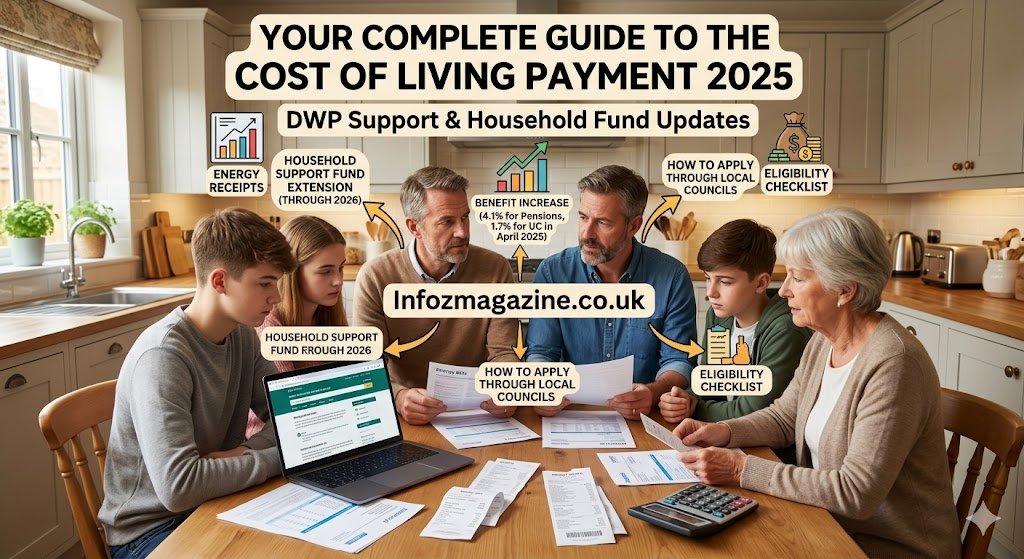
The financial landscape for millions of households across the United Kingdom continues to be a primary concern as we navigate the current economic climate. Many people are searching for clarity regarding the cost of living payment 2025 and what specific support the government has put in place for the new financial year. While the previous years saw direct, automated lump-sum payments hitting bank accounts, the strategy for the cost of living payment 2025 has shifted toward a more localized and targeted approach. Understanding these changes is essential for anyone relying on state support to manage their monthly outgoings and essential bills.
The Department for Work and Pensions (DWP) and the Treasury have moved away from the universal one-off payments that characterized the 2023 and 2024 periods. Instead, the focus for the cost of living payment 2025 revolves around the extension of the Household Support Fund and the uprating of standard benefits. This means that while you might not see a single £300 or £900 payment labelled as such in your bank statement, there are still significant avenues for financial assistance available to those who are struggling. This transition is designed to ensure that the most vulnerable individuals receive help that is tailored to their specific needs through their local authorities.
The Role of the Household Support Fund in 2025
One of the most critical components of the cost of living payment 2025 framework is the extension of the Household Support Fund. The government has committed hundreds of millions of pounds to this fund, extending it through to March 2026. This fund is distributed to local councils across England, who then decide how to allocate the money to residents in their area. Because the cost of living payment 2025 is now managed locally, the type of support you receive can vary depending on where you live. Some councils provide supermarket vouchers, while others offer direct cash grants or assistance with energy arrears.
To access your share of the cost of living payment 2025 via the Household Support Fund, you generally need to apply through your local council’s website. Eligibility is often broad, reaching beyond just those on means-tested benefits. Even if you are in work but on a low income, you may qualify for help with essentials like food, water, and energy bills. It is vital to check your local authority’s “Cost of Living” portal regularly, as these funds are often released in phases throughout the year and can be exhausted quickly due to high demand.
Benefit Uprating and Increased Monthly Payments
While the direct lump-sum cost of living payment 2025 is no longer the primary method of delivery, the government has implemented an inflation-linked increase to most benefits starting in April 2025. For many, this serves as a permanent version of a cost of living payment 2025 by increasing the baseline of their monthly income. Benefits such as Universal Credit, Personal Independence Payment (PIP), and Housing Benefit have seen an increase of 1.7%, reflecting the Consumer Prices Index from the previous autumn. This ensures that the value of your support does not erode as prices for goods and services fluctuate.
Furthermore, pensioners are seeing a more significant boost that functions as a reliable cost of living payment 2025. Under the Triple Lock mechanism, the State Pension has risen by 4.1%, which is significantly higher than the standard benefit increase. For a full new State Pension, this adds hundreds of pounds over the course of the year. While this is technically an uprating, for many elderly residents, it provides the necessary cushion that the previous cost of living payment 2025 schemes offered during the height of the energy crisis.
Eligibility Criteria for 2025 Support Schemes
Determining who is eligible for the cost of living payment 2025 requires looking at several different categories of support. For the Household Support Fund, councils often prioritize households with children, pensioners, or individuals with disabilities. However, the beauty of this version of the cost of living payment 2025 is its flexibility. Councils have the discretion to help people who may have narrowly missed out on previous national schemes. If you are facing a sudden financial crisis or are unable to meet your basic needs, the council-led cost of living payment 2025 is your primary safety net.
For the benefit increases, eligibility remains the same as your existing claims. If you are already receiving Universal Credit or PIP, your new rates will be applied automatically from the start of the 2025/26 tax year. You do not need to apply for this version of the cost of living payment 2025. It is also worth noting that the Winter Fuel Payment has become more targeted, now focusing on those who receive Pension Credit or other means-tested benefits. This change emphasizes the importance of checking if you are entitled to Pension Credit, as it acts as a gateway to several forms of the cost of living payment 2025.
Energy Bills and Targeted Assistance
Energy costs remain a significant burden, and much of the cost of living payment 2025 logic is geared toward heating and electricity. Beyond the Household Support Fund, many energy suppliers continue to offer their own hardship funds. These private schemes often work in tandem with the government’s cost of living payment 2025 goals by clearing energy debts for those in extreme hardship. If you find that your benefit increase isn’t covering your utility bills, reaching out to your provider is a necessary step alongside seeking government help.
The Warm Home Discount also remains a vital part of the cost of living payment 2025 ecosystem. Eligible households receive a one-off discount on their electricity bill, usually applied between October and March. While this is a long-standing scheme, it has been refined to ensure that those in the highest-need brackets receive the discount automatically. Combining the Warm Home Discount with local council support creates a comprehensive package that mirrors the effectiveness of a dedicated cost of living payment 2025.
How to Apply for Support in Your Area
Because the cost of living payment 2025 is decentralized, the application process is not uniform. The first step for any resident is to visit the GOV.UK website and use the “Find your local council” tool. Once on your council’s homepage, search for “Household Support Fund” or “Crisis Support.” This is where the cost of living payment 2025 funds are hidden. You will typically need to provide some evidence of your financial situation, such as a recent bank statement or proof of your benefit award.
Many charities and advice bureaus, such as Citizens Advice, are also helping people navigate the cost of living payment 2025 landscape. They can help you identify if you are missing out on any “hidden” benefits that could increase your income more than a one-off payment would. Since the cost of living payment 2025 is now built into the broader welfare system and local grants, professional advice is more valuable than ever to ensure you are receiving every penny you are entitled to.
Looking Ahead to 2026
As we move through the 2025/26 financial year, the government will continue to monitor inflation and energy prices to decide the future of the cost of living payment 2025. Current plans suggest that the Household Support Fund will remain the primary tool for emergency help until at least March 2026. This indicates that the philosophy of the cost of living payment 2025 has moved from “emergency response” to “sustained local support.” Staying informed about these dates is crucial for planning your household budget over the coming eighteen months.
It is also important to be wary of scams related to the cost of living payment 2025. Official support through the DWP or your local council will never ask you to provide your bank details via a text message link or an unsolicited email. Most forms of the cost of living payment 2025 are either paid automatically with your benefits or require a formal application through an official .gov.uk website. Protecting your personal information is just as important as securing the financial help you need.
Conclusion
In summary, the cost of living payment 2025 exists in a different form than many people expected. Instead of a series of automatic payments from the DWP, it is now a combination of increased weekly benefit rates, a higher State Pension, and the locally administered Household Support Fund. By utilizing the cost of living payment 2025 through these various channels, households can still find the relief they need to manage rising costs. The transition to a targeted system means that while you may need to be more proactive in applying for help, the support available through the cost of living payment 2025 is designed to reach those who truly need it most. Keep checking with your local authority and ensure your benefit claims are up to date to make the most of the cost of living payment 2025.
Frequently Asked Questions
Will there be a £300 cost of living payment 2025?
There are currently no plans for a universal £300 payment from the DWP. Instead, support is provided through the Household Support Fund and benefit increases.
Who is eligible for the cost of living payment 2025 through councils?
Eligibility varies by council but generally includes low-income families, pensioners, and those with disabilities who are struggling with essential costs.
Do I need to apply for the cost of living payment 2025 benefit increase?
No, the 1.7% increase for benefits and the 4.1% increase for pensions are applied automatically to your regular payments starting in April 2025.
Is the cost of living payment 2025 still available for energy bills?
Yes, you can apply for energy-specific help via your local council’s Household Support Fund or through the Warm Home Discount scheme.
When does the cost of living payment 2025 support end?
The current Household Support Fund is scheduled to run until March 31, 2026, providing a full year of localized assistance.
I have completed this detailed guide for you. Would you like me to generate some social media snippets to help promote this post?
